



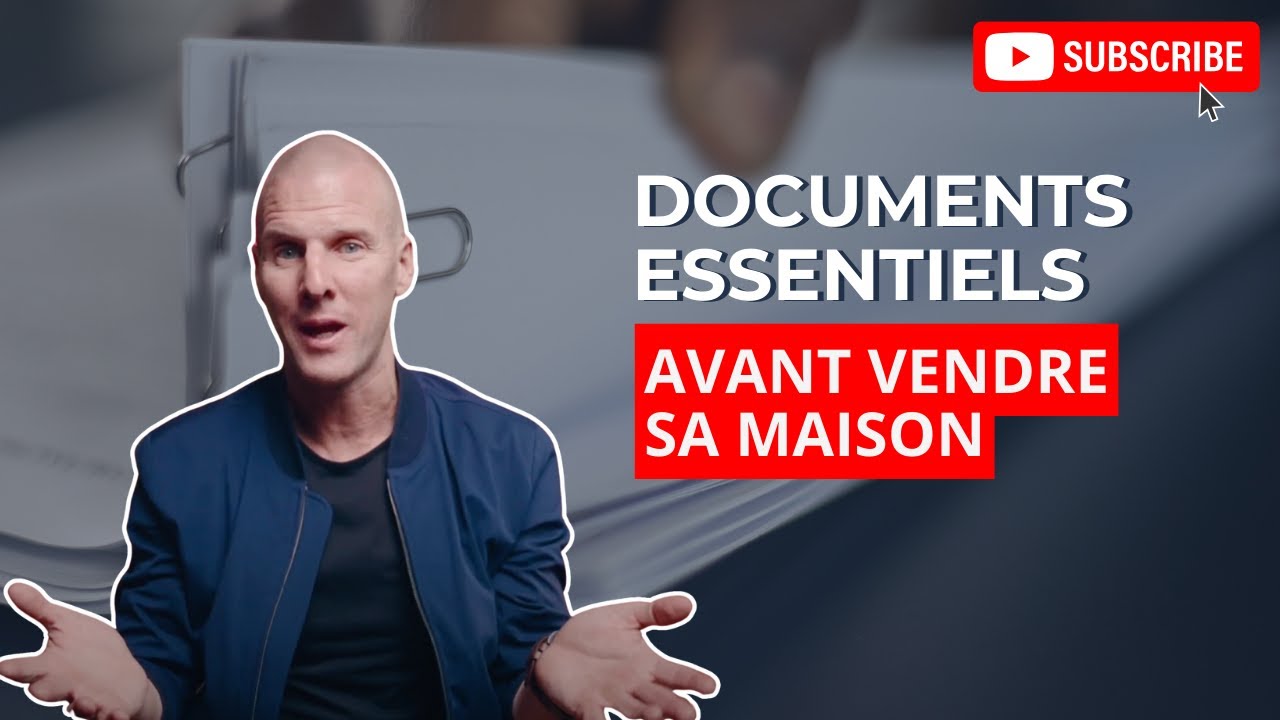
Even before putting up the sign, selling a house is won (or complicated) through proper documentation. A well-prepared seller, with all their documents in hand, sells faster, with less stress, and more confidence. Conversely, an incomplete file creates delays, doubts for the buyer, and sometimes leads to derailed transactions. Here is the complete list of documents to prepare for selling in Quebec, simply explained by David Tardif, a real estate broker in Quebec.
Quick response
To sell a house in Quebec, prepare in advance: the property titles, an up-to-date certificate of location, municipal and school tax accounts, invoices and warranties for work, the latest mortgage statement, energy bills, the seller’s declaration, and past inspection reports. For a condo, add expense statements, minutes of meetings, financial statements, and the declaration of co-ownership. David Tardif’s advice: group everything in a digital folder (Cloud) to easily share it with your broker.
Simply Explained
A complete sales file is a bit like a car’s service record. Two identical cars: the one that comes with all its invoices, proof of maintenance, and history sells faster and for more, because the buyer has confidence. A house is the same. Each document answers a question the buyer has — and each unanswered question becomes a doubt, thus a hindrance.
What you will find
- Why a complete file sells faster
- The list of 10 essential documents, simply explained
- Additional documents for a condo
- David Tardif’s advice for organizing everything
Why prepare your documents before selling
Gathering your documents before listing is not a mere formality: it’s a strategy. It avoids delays when an offer is made, reassures buyers, and establishes a climate of trust that facilitates negotiation. A buyer who quickly receives clear answers feels secure — and a confident buyer makes better offers.
Essential documents for selling your home
1. Property Titles
This is proof that you are indeed the owner. They were generally given to you by the notary at the time of purchase. They confirm your rights to the property.
2. Certificate of Location
This is a crucial document that shows the property boundaries and the location of constructions. Be careful: if it is more than 10 years old or if modifications have been made (extension, shed, pool, etc.), a new certificate will generally be required.
Simple Definition — Certificate of Location
It is a report prepared by a land surveyor that describes the current state of the property: land boundaries, building position, easements, encroachments. It reassures the buyer and their financial institution.
3. Municipal and School Tax Accounts
They allow the buyer to know the fixed costs associated with the property. This is basic information for them to assess their real budget.
4. Invoices and Warranties for Work
They prove the quality and compliance of renovations carried out. A new roof, a replaced furnace, new windows: with invoices, it becomes a selling point. Without them, it becomes a doubt.
5. Latest Mortgage Statement
It ensures that balances will be settled with the notary at the time of sale. This confirms the amount to be repaid on your loan.
6. For Condos: Co-ownership Documents
If you are selling a co-ownership, add: expense statements (condo fees), minutes of meetings, the syndicate’s financial statements, and the declaration of co-ownership. These documents reveal the financial health and management of the building — a serious buyer will always ask for them.
Simple Definition — Declaration of Co-ownership
This is the “rule book” for the condo building. It defines the rights, obligations, and sharing of spaces among co-owners. The buyer must be aware of it before purchasing.
7. Energy Bills
Electricity and heating bills help the buyer plan their budget. An energy-efficient home becomes a concrete selling point — with figures to back it up.
8. Seller’s Declaration
This is a document of total transparency on the condition of the house: its strengths as well as its weaknesses. Properly completed, it protects the seller (it avoids claims later) and reassures the buyer.
Simple Definition — Seller’s Declaration
This is a form where the seller honestly describes what they know about their property (past infiltrations, repairs, resolved issues, etc.). Transparency protects both parties.
9. Photos of Work and Insurance Policy
Useful additions: photos of the work (especially what is now hidden behind the walls) provide reassurance, and the insurance policy helps the buyer compare coverages.
10. Past Inspection Reports
If you have already had the property inspected, keep the reports. Always with transparency in mind: showing that you have nothing to hide builds trust.
📥 Download the free checklist (PDF)
David Tardif’s advice: a digital file
Group all these documents in a digital folder (Cloud). It’s easier to update, share with your broker, and transmit to the buyer at the right time. No more scattered papers in a drawer: a clean and complete file is a sign of seriousness that speeds up the entire transaction.
What this means for sellers
Start preparing your file as soon as you consider selling, not when you receive an offer. Check the date of your certificate of location first — it’s often the document that takes the longest to obtain. The more complete your file, the more control you keep over the timeline.
What this means for buyers
A well-prepared seller is often a serious seller. Do not hesitate to ask for these documents: they allow you to buy with full knowledge and avoid unpleasant surprises. The absence of key documents (such as an up-to-date certificate of location) should prompt you to ask questions.
David Tardif’s Analysis
According to David Tardif, real estate broker in Quebec and founder of Endurance Groupe Immobilier par Tardif, file preparation is part of the same philosophy as the rest of his approach: making decisions based on facts, not impressions. “We set the price with data, thanks to the Tardif Index, and we prepare the sale with a solid file. A smooth transaction is built even before the first visit.”
FAQ
What documents are needed to sell your house in Quebec?
The main ones are: property titles, an up-to-date certificate of location, municipal and school tax accounts, invoices and warranties for work, the latest mortgage statement, energy bills, the seller’s declaration, and past inspection reports. For a condo, co-ownership documents are added.
What is a certificate of location and when should it be renewed?
It is a land surveyor’s report that shows the property boundaries and the location of constructions. A new one is generally required if it is more than 10 years old or if modifications have been made to the property (extension, pool, shed, etc.).
What is the seller’s declaration?
It is a transparency document where the seller honestly describes the condition of their property, its strengths and weaknesses. Properly completed, it protects the seller against future claims and reassures the buyer.
Should renovation invoices be provided for sale?
Yes, it is highly recommended. Invoices and warranties prove the quality and compliance of the work. They transform a renovation into a concrete selling point, whereas their absence creates doubt for the buyer.
What additional documents are needed to sell a condo?
For a co-ownership, add expense statements, minutes of meetings, the syndicate’s financial statements, and the declaration of co-ownership. These documents show the financial health and management of the building.
Why prepare your documents before listing?
Because a complete file sells faster and builds trust. It avoids delays when an offer is made, reassures the buyer, and facilitates negotiation. David Tardif recommends grouping everything in a digital file shared with your broker.
Are you thinking of selling your property?
David Tardif, a real estate broker in Quebec, and Endurance Groupe Immobilier par Tardif help you prepare a complete file and set the right price thanks to the Tardif Index — to sell faster, without unpleasant surprises.
Get your free evaluation or contact the Endurance team. Sell more. Buy better. Decide right.
About the Author — David Tardif
Residential and commercial real estate broker (OACIQ, license E2815), David Tardif has over 20 years of experience. He is the founder of Endurance Groupe Immobilier par Tardif and the creator of the Tardif Index. Team ranked #1 in Canada (Royal LePage 2024-2025), over 375 Google reviews 4.9/5. Learn more about David.