



Converting a plex into condos—is it possible? Yes—and in some cases, it’s even highly advantageous. When done right, a conversion can increase the value of a building by several hundred thousand dollars. But between divided and undivided co-ownership, financing, rental, and conversion costs, you need to know what you’re getting into. Here’s a clear guide from David Tardif, a real estate broker in Quebec with over 20 years of experience.
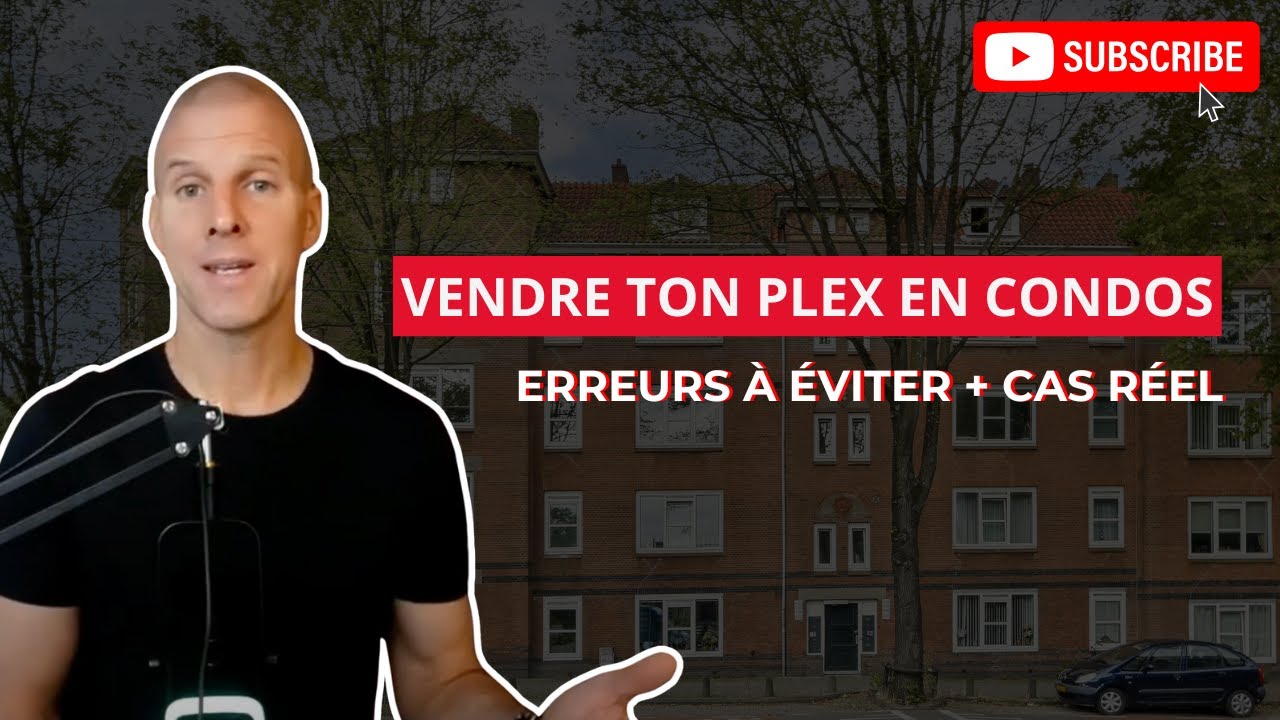
Quick response
Yes, you can convert a plex (duplex, triplex…) into a co-ownership, provided you have the right support. Two options: divided co-ownership (the “classic” condo, more regulated) or undivided co-ownership (simpler to set up, but with financing limited to a few institutions like Desjardins and National Bank). Conversion often allows you to increase the overall value of the building—in a real case presented by David Tardif, a triplex goes from a value of approximately $850,000 to approximately $1,250,000. The main obstacles: the building should ideally be vacant, conversion costs approximately $10,000, and financing is more restricted.
To Understand Simply
Imagine a large pizza (the plex). As long as it’s whole, you sell it as a single pizza. If you cut it into well-defined slices (the condos), each slice can be sold separately—and the sum of the slices is often worth more than the whole pizza. Converting a plex into condos is exactly that: cutting a building into individually sellable units to increase its total value.
What You Will Learn
- The difference between divided and undivided co-ownership
- Financing an undivided co-ownership (and why it’s more limited)
- Why renting a unit in an undivided co-ownership is risky
- The 5 major advantages of conversion
- The obstacles and conditions to respect
- A case study: from ~$850,000 to ~$1,250,000
Divided or Undivided Co-ownership: The Basics
This is the first decision to understand, as everything else flows from it.
Simple definition—divided co-ownership
This is the “classic” condo. Each unit has its own lot number, its own tax account, and the building is governed by a declaration of co-ownership and a syndicate (laws 16 and 141, common areas, collective insurance, contingency fund).
Simple definition—undivided co-ownership
Here, the co-owners own the building together, in shares, with a right of exclusive use of their unit. A single tax account, a single insurance policy for the building. It’s simpler to set up, but financing is more limited.
Divided Co-ownership
Each unit becomes a separate condo: separate taxes, defined common areas, insurance and management governed by Quebec laws 16 and 141 (governance, contingency fund, etc.). This is the most regulated and most “bankable” formula, but also the most complex to set up.
Undivided Co-ownership
The owners hold the building in common, each with exclusive use of their unit. It has the same elements as a true co-ownership (building co-ownership, contingency fund, usage rules), but in a more flexible framework. Key advantage: no municipal authorization is required for undivided co-ownership.
Financing in Undivided Co-ownership
This is the point to know before getting started. Financing for an undivided co-ownership is offered by a limited number of institutions—notably Desjardins and National Bank. Since the building remains a single “block” in the eyes of the tax authorities, there is a single tax bill and a single insurance policy for the whole, which the co-owners share. In practical terms, buyers often need to finance with the same institution, which reduces the pool of buyers.
Caution About Renting in Undivided Co-ownership
Renting a unit for which you have exclusive use in an undivided co-ownership carries a significant risk: the tenant may acquire a status of “super tenant”, with enhanced protection that complicates repossession of the dwelling or a future sale. In short: in undivided co-ownership, rental must be handled with great caution, and ideally with professional support.
Simple definition—”super tenant”
This is a tenant who, in certain undivided co-ownership situations, benefits from enhanced protection of their right to remain in the premises. Result: it can become very difficult (or costly) to recover the unit.
The 5 Major Advantages of Conversion
- Increase the price—the sum of the units sold separately often exceeds the value of the building as a whole.
- Keep a unit—you can sell certain units and keep yours, which eases financial pressure.
- Choose your co-owners—especially in undivided co-ownership, where agreement among co-owners is essential.
- Share the costs—taxes, insurance, maintenance: expenses are divided among the co-owners.
- No municipal authorization—for undivided co-ownership, which simplifies and accelerates the process.
The Obstacles and Conditions to Respect
- Building ideally vacant—conversion is much simpler if the building is vacant, or if tenant departures are negotiated in advance.
- Conversion costs—expect approximately $10,000 (professional fees, documents, etc.).
- Limited financing—in undivided co-ownership, only a few institutions provide financing (Desjardins, National Bank), which restricts the number of potential buyers.
Case Study: From ~$850,000 to ~$1,250,000
David Tardif presents a real case: a vacant triplex, converted using a “piecemeal” strategy (each unit positioned and sold separately). Result: a projected overall value that goes from approximately $850,000 for the building as a whole to approximately $1,250,000 once converted and sold by unit. This is the full power of conversion, when the context is right.
Note: this figure is a projected and illustrative value. Each building and each market are different. The actual potential must be validated on a case-by-case basis.
What This Means for Investors
Converting a plex into condos is one of the most effective strategies to unlock hidden value in a building. But it requires proper structuring: the right type of co-ownership (divided or undivided), an ideally vacant building, solid financing, and an accurate reading of the market. This is not a project to improvise alone.
What This Means for Sellers
If you own a plex and are considering selling, it’s worth having the conversion potential assessed before listing. Selling the building as a whole is not always the best option: in the right context, conversion can be worth hundreds of thousands of dollars more.
David Tardif’s Analysis
According to David Tardif, real estate broker in Quebec and founder of Endurance Groupe Immobilier par Tardif, a successful conversion relies on a rigorous analysis of the numbers. “You don’t decide on a conversion on a whim. We look at the value as a whole, the projected value per unit, the costs, the financing, and market tension—that’s exactly the logic of the Tardif Index. The right strategy is one that holds up on paper before it holds up in real life.”
Disclaimer: this information is general and does not replace legal or tax advice. Each case is unique: validate your project with a notary and/or a legal professional.
FAQ
Can You Convert a Plex into Condos in Quebec?
Yes, it’s possible, provided you have the right support. You can convert a plex into divided co-ownership (the classic condo) or undivided co-ownership (more flexible, but with limited financing). In the right context, conversion can significantly increase the value of the building.
What Is the Difference Between Divided and Undivided Co-ownership?
In divided co-ownership, each unit has its own lot, its tax account, and its legal framework (laws 16 and 141). In undivided co-ownership, the co-owners own the building together, with a right of exclusive use of their unit, a single tax bill, and a single insurance policy. Undivided co-ownership is simpler, but its financing is limited.
Why Is Renting a Unit in Undivided Co-ownership Risky?
Because the tenant may acquire a “super tenant” status, with enhanced protection that complicates repossession of the dwelling or a future sale. In undivided co-ownership, rental must be managed with great caution and professional support.
How Much Does Converting a Plex into Condos Cost?
You should expect approximately $10,000 in conversion costs (professional fees, documents, etc.), in addition to the conditions to respect: the building should ideally be vacant and financing may be more restricted.
Which Institutions Finance an Undivided Co-ownership?
Financing for an undivided co-ownership is offered by a limited number of institutions, notably Desjardins and National Bank. This reduces the pool of buyers, a factor to consider in the conversion strategy.
Is It Profitable to Convert a Plex into Condos?
Often, yes. The sum of the units sold separately frequently exceeds the value of the building as a whole. In a real case presented by David Tardif, a triplex goes from a value of approximately $850,000 to approximately $1,250,000. But the actual potential depends on the building and the market.
Do You Own a Plex with Potential?
David Tardif, real estate broker in Quebec, and Endurance Groupe Immobilier par Tardif analyze the conversion potential of your building—value as a whole, projected value per unit, costs, and financing—with the rigor of the Tardif Index.
Get your free evaluation or contact the Endurance team. Sell more. Buy better. Decide right.
About the Author—David Tardif
Residential and commercial real estate broker (OACIQ, license E2815), David Tardif has over 20 years of experience. He is the founder of Endurance Groupe Immobilier par Tardif and the creator of the Tardif Index. Team ranked #1 in Canada (Royal LePage 2024-2025), over 375 Google reviews 4.9/5. Learn more about David.